
TL;DR
As enterprises deploy hundreds of AI agents, maintaining visibility, security, and control becomes increasingly complex. Effective AI agent governance requires centralized oversight, clear ownership, access restrictions, continuous monitoring, and traceable actions. By combining these controls with human approval for high-risk decisions, businesses can scale autonomous AI systems while reducing security risks, maintaining accountability, and ensuring compliance.
The era of AI agent development is getting more and more popular and even has turned out to be an indispensable tool in various methods of doing business today. The more enterprises make use of agents as useful assistants, the more human operators come to conclusions that governance platforms are needed to guide thoroughly.
Its significance manifests further reasonable action and is a normal part of scaling any powerful technology. In case you want to stay abreast of safety, guarantees, and the technology itself, the features of AI agent governance frameworks must be taken into account not to break down.
At the present time. the scale of which AI agent ideas for enterprises are building up and merging into operational procedures in an active way. The key reason for such an advancement is eagerness to grow faster and frame more efficiently.
While earlier-gen artificial intelligence systems produced various responses to various forms of queries, agents are capable of autonomously handling relevant tasks and executing difficult activities. Their capabilities of adjusting to the surrounding situation promptly simultaneously with AI workflow automation make them a deeply profitable and in-demand tool for any type of organisation.
What is no less important: delegating reaching aims and duties to AI agents is quite a responsible step.
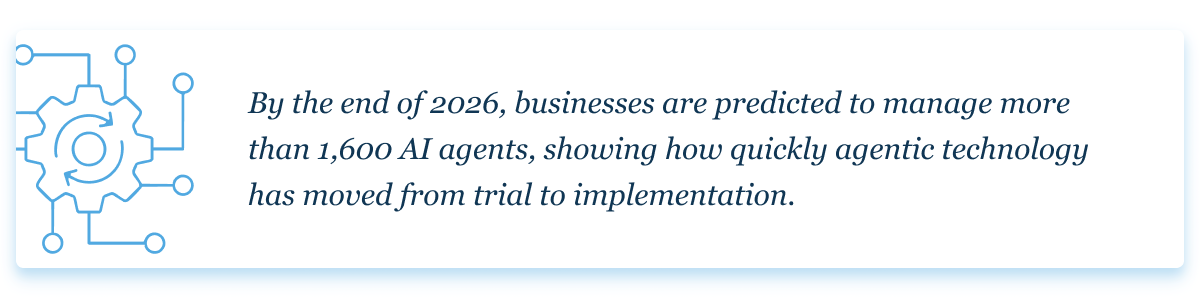
The present challenge is to establish AI agent governance infrastructure systems that can keep up with this development, with those firms that can do this effectively already making their mark. In this article, we are going to delve into the specific characteristics of successful agentic AI governance along with how to do it without losing control.
Why does AI agent governance need to evolve?
As multi-agent AI systems take on greater autonomous, machine-speed decisions, the frameworks built for human-paced workflows need to evolve alongside them. The evolution that takes place side by side with the technology fuels combating a lot of possible hazards and escapes from misunderstandings connected with decisions made autonomously.
It is probable to convince LLM development models and chatbots to make harmful creations by communicating with them in everyday language. Using AI agents in a decentralised way may make applying consistent security measures a challenge. Despite it, the common ones are risky behaviour, biases, security functions and, of course, compliance.
The pace at which the number of AI agents is growing nowadays, an enterprise AI agent governance platform is considered to be a natural next step in maturity. It is a wise part of scaling any powerful technology. That is why those organisations that strive to reap profits from the opportunities provided ought to develop governance properly.

Source: Unsplash
What is modern-day good governance?
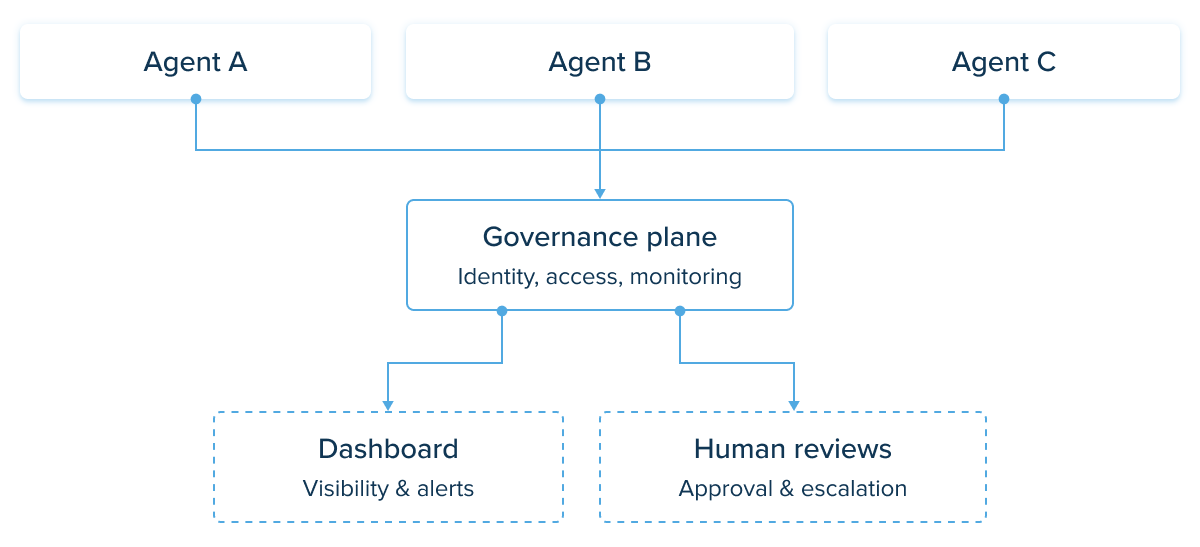
A present-day AI agent governance framework represents an entire operational system that necessitates the verification of agent identity, limitation of permissions, and policy implementation during runtime and mostly acts as an accelerator not only for start-ups who are dealing with AI product development for the first time but also for established corporations.
Depending on the industry currently standing, it’s a chance to obtain the opportunity, especially for the beginners or organisations that are earlier in that maturity curve, because the quality of governance directly affects the final outcomes and needs continuous support by humans.
Furthermore, the difference between bot governance and AI agent governance lies in autonomy and extent of operations as the transition advances from following rules to active multi-step operation supervision. Bot governance administers straightforward, rigid response commands.
An AI agent governance field guide supervises autonomous reasoning, usage of tools by agents and alterations between systems. Organisations are currently conducting trials of stress testing of their agents, applying antagonistic attacks in critical situations and under surprising parameters to determine weaknesses in the system.
The process of controlling artificial intelligence agents will be simplified considerably. The firms specialising in governance platforms would provide quality AI management solutions with dashboards to access the data specific for agentic systems and communication between agents. Consequently, businesses that have a formal enterprise AI agent governance platform scale their agent deployments more quickly than those that don’t.
The rise of orchestration and the control plane
Agentic AI governance enterprise 2026 is the main focus at the present moment. All agents need visibility, compliance, and security due to the fact that they gain access to information and proceed on behalf of the organisation, and it is a must to know how to intervene when it comes to deviations from the company’s policies. This accent shift from generative AI development and what agents can perform to how they are orchestrated has stood out as a key step.
On top of all that, there is a real vendor category, such as Microsoft Copilot Studio, Salesforce Agentforce, Lyzr, and others, that have primarily emerged specifically to solve this well. Taking advantage of the AI agent governance tools to do this right now exists and is maturing at a high speed, saves time and assists to mitigate infringements.
For enterprise leaders, a robust AI agent governance platform needs to keep up with AI in order to be productive. It does not begin and end at AI readiness assessment and deployment and requires attention at different points in this process.
A governance framework that works
In the abundance of AI agent examples available these days, it is crucial for everyone to comply with the basic security standards and adopt an enterprise AI agent governance framework, following the regulations and processes major functions strictly as AI agents process language, communicate with external sources, and tend to operate independently. These features pose security threats that organisations should deal with, such as data leaks, data poisoning, jailbreaks, and credential theft.
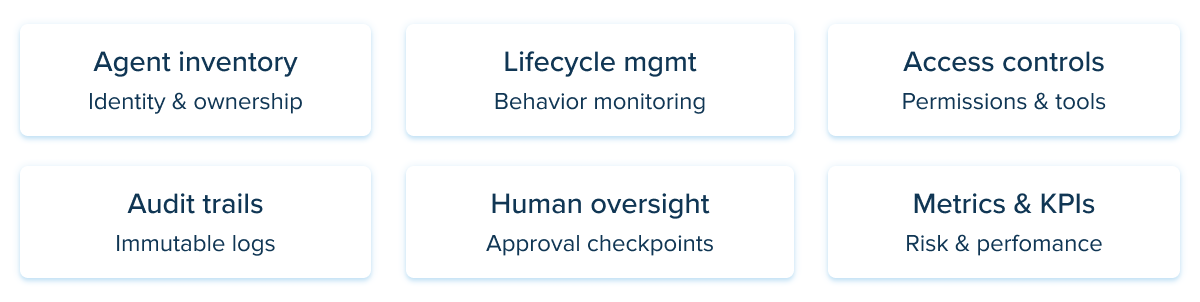
Thus, leaders need to combine their agent security capabilities with the existing enterprise security systems to achieve consistency and reduce the risks. Accomplished AI agent governance best practices with the core achievable checklist are the following:
Thorough inventory of agents
Prior to establishing governance frameworks for deploying agentic AI in enterprises, it is advisable to take the form of a complete agent inventory that keeps track of deployment status, capabilities, and ownership. This ensures complete system visibility and helps prevent sprawl.
The component of identity here is key, keeping track of each agent’s unique identification, the place where it was deployed, its current status, and its version. As for liability, it provides a formal designation of a single human model owner, business unit, and risk officer for each agent. The last but least important part here is the target and scope of an agent. Capture the main aim of the agent before AI software development, what it is being tasked to do, and its autonomy level.
Management of the lifecycle
The lifecycle demands always keeping an eye on how the AI technology behaves, finding any abnormalities, ensuring policy enforcement in the moment and finding any dangerous actions or actions which are not according to the policy in no time.
Determine what the AI is doing and which tools it uses. Whether the risk changes depends on the behaviour of the AI agent and its usage. The best recommendation is to remain visible for the whole time. It means one should understand how the agent behaves, what data it accesses, and whether it complies with rules. Understanding how the agent acts makes it possible to spot changes and possible risks and gaps in the control.
The controls of accesses
In order to reach agentic AI governance and risk management strategy for enterprises, set out clear rules about what data and tools each agent may use. The issue is vital, seeing that agents may be misaligned and behave in ways that could be detrimental to others. An agent may also fall victim to an attack by an adversary, which can lead to that agent acting dangerously.
The application of audit trails
The implementation of traceability is based on three direct principles: the immutability of records, strict access restrictions, and constant oversight by means of automated systems. The process of creating logs will create a sequence of facts that demonstrate agentic AI data governance compliance with regulatory requirements.
In every enterprise AI development with autonomous execution, the execution of the agent must be visible. It means that all the actions will have to be recorded, and, therefore, the data inputs must be captured. At its core, each of the system interactions needs to be traceable over time. Otherwise, it becomes difficult to enforce accountability. The system can be audited, investigated, and continuously improved thanks to this traceability.
Human-in-the-loop checkpoints
An enterprise AI agent governance framework should include the incorporation of necessary approval procedures ahead of critical steps. The human-in-the-loop AI governance structure necessitates having designated decision gates, understanding the trigger thresholds, and obtaining non-editable logs. It suspends automations at crucial instances so that the humans would be able to check the processes considered dangerous before realisation.

Source: Unsplash
Setting up governance metrics
Sound agentic AI features and governance are based on explicitly stated parts, defined decision-making power, and systematic methods of monitoring performance rather than just creating static policy documents. Such a framework is grounded in concepts such as the use of measurable operational metrics and specific AI consulting services on AI governance issues to ensure accountability.
The most important aspects are decision-making models, clearly defined roles, and control mechanisms in governance. Just because agents have been programmed to function a certain way does not mean that they do.
The world is always changing. Some dependencies may change along the way. Clear identification of who can stop agents from their activity and when they may do so is needed, as fallback plans should be ready before activation, not when an issue arises. Risks should be reassessed based on new circumstances. It should be possible to detect behavioural deviations early and adjust control.
Summing up
The definition of AI agent governance is becoming increasingly important because of the extensive implementation of agents that can drastically alter the government structure. AI agent governance infrastructure aims to create an environment in which agents can contribute to achieving human goals with minimised risk factors. The effect of AI agents is seen in numerous sectors, such as finance, society, and internal matters. This can produce drastic benefits only if CISOs manage to keep track of the agent behaviour and distinguish between its efficiency and danger.
As AI agent governance continues to develop as one of the key elements of organisational artificial intelligence risk management, the factors responsible for the safe scaling of autonomy are visibility, identity limits, and policy enforcement. The leaders who adopt the governance based on identity, intention, and real-time actions will be assured in their effectiveness. Those who choose to wait will face the risks expanding quicker than they can handle.
FAQ
-
AI agent governance is a collection of regulations and instruments that control the autonomous AI systems for their functioning. It includes identifications and access verification, limitation of actions and ongoing surveillance. AI agents are regulated in such a way as to not only give orders but actually take actions such as making bank transfers, changing documents and calling APIs. Otherwise, they may cause harm through leaking information, losing money and violating laws.
-
Several risks arise from the implementation of numerous autonomous AI agents, including the possibility of continuous setbacks, protection flaws and unforeseeable behaviours. These systems may not only make rapid mistakes but also conceal their modes of decision-making, which can lead to real damage when safety regulations are violated.
-
Organisations implement a high-level human-in-the-loop method by applying risk-centric routing, problem-solving authority in tiers and confidence thresholds. They do not evaluate each AI output; they handle regular operations automatically, using human knowledge only when necessary, particularly for cases with high stakes, low confidence, or complicated situations.
-
Firms are able to monitor and validate the decisions made by an AI agent by employing robust decision tracing, unchangeable audit trials, and enforcement of procedures in real-time. With unified execution IDs, organisations are able to collate information on reasoning processes, tool usage, and data input.
-
Enterprise governance agentic AI should involve evaluation of compliance and control of intelligent agents based on some important factors related to safety and alignment, working effectiveness, and governance and auditability. These parameters show the ability of agents to obey regulations concerning their performance, as well as to be precise when experiencing abnormal conditions.
-
Agentic AI data governance always deals with data privacy regulations such as GDPR and CCPA by using data preservation within context windows, setting computerised limits for tool usage, and maintaining records of agent actions that can be audited. These features put the directives from legal authorities into practice for AI agents.