

































We help you get a better handle on your business vision and chalk out a step-by-step strategy for the adoption of language models. LLM developers define a use case, assess your proprietary data, and provide actionable recommendations on the tech infrastructure during large language model consulting.
Our engineers build custom LLM models on top of GPT, DALL.E2, and other foundation models and make them a native part of your tech ecosystem. Our NLP, machine learning, and data science experts help tailor the model to your specific business needs.
We customize off-the-shelf LLM language models with your data to maximize the value of base models for your business. Our machine learning engineers fine-tune them to your unique business needs, improve accuracy rates, and make the model more efficient.
Our support team keeps a close watch on your language learning model, making sure its performance is up to par.
From model optimization to troubleshooting, our generative AI company is there for you 24/7, perfecting, enhancing, and evolving your AI solutions.
A large language model is a type of artificial intelligence that relies on a wide range of NLP, deep learning, and ML algorithms to understand the structure of the language. It is trained on a very large dataset to generate accurate responses and catch up with conversations.
Large language models have been shown to outperform traditional models on a variety of tasks, including machine translation, question answering, and sentiment analysis. Also, unlike traditional chatbots and virtual assistants, LLMs can come in handy for a variety of tasks, including text generation, image captioning, summarization, and other large language models use cases.
Large language models examples include the GPT model which is trained on a dataset of 570 GB and fine-tuned for a variety of language tasks, such as translation, summarization, and question-answering. The model is 175 billion parameters in size, which makes it the largest language model ever trained.
Megatron is another example of a large, powerful transformer with 11 billion parameters. Our team also works with OpenLLaMA, StableLM, PaL, and other major conversational AI solutions. We select the right LLM that suits your business needs and workloads.
A large language model is created by training a neural network on a large corpus of text. The neural network learns to predict the next word in a sequence, based on the previous words in the sequence. The more parameters the mode has, the more capable it is, and the more training data it needs to score a high accuracy rate.
Unlike traditional AI software, LLMs are general purpose and can be fine-tuned to match the specific needs of a given business. From sentiment analysis to content generation to granular recommendations, language models can support business operations across multiple areas.
The cost of developing, training, and deploying a large language model can vary significantly depending on several factors, including the model’s size, complexity, usage, and whether you’re building it in-house or using a cloud-based API. Here’s an overview of the potential costs involved:
The development of a Large Language Model typically involves several key stages, each of which is crucial to building a robust, effective, and scalable model. Below are the primary stages in LLM development:
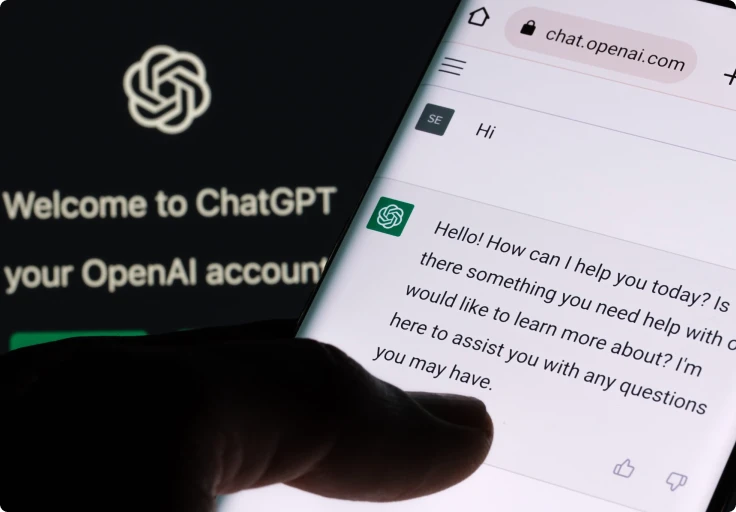
GPT is one of the most popular language models that is based on the combination of NLP, reinforcement learning, neural networks, and other innovative technologies. This ready-made model can be integrated into applications or customized on proprietary datasets through fine-tuning.
The cost of a large language model varies widely depending on how it is built and used.
The cost of a large language model project ranges from a few thousand dollars for API integration, $5k–$300k for fine-tuning, up to $500k–$5M+ for a fully custom model with deployment and infrastructure.
Companies experienced in mobile app development with large language model integration include InData Labs, which delivers AI-powered mobile apps with chatbots, AI agents, analytics, and custom LLM solutions.
Other strong U.S. providers include Globant, ThoughtWorks, IBM Consulting, and Accenture—all known for enterprise mobile apps with AI, automation, and conversational interfaces.
These firms combine mobile engineering, cloud architecture, and generative AI expertise to deliver scalable apps with LLM-powered assistants, personalization, and advanced analytics.
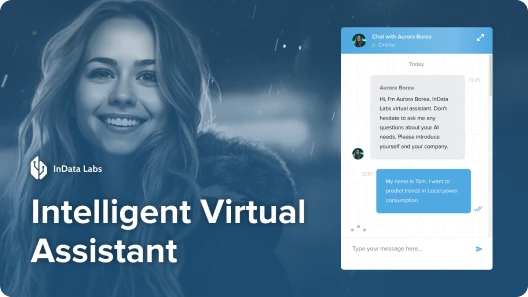
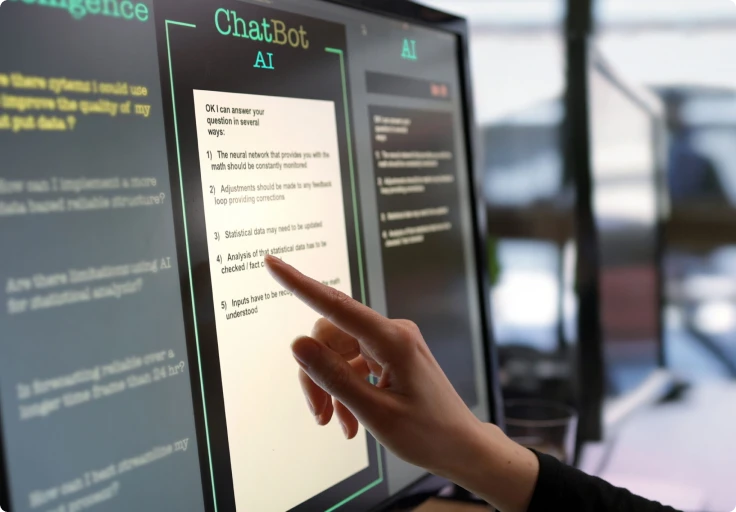
An LLM assistant is an AI-powered solution built on large language models that can understand natural language, generate human-like responses, and perform knowledge-driven tasks such as answering customer inquiries, summarizing documents, automating internal workflows, assisting with research, and supporting decision-making.
For businesses, this translates into faster customer service, reduced operational costs, improved employee productivity, consistent communication, scalable personalization, and better use of internal data through intelligent search and insights.
To achieve these benefits reliably and securely, it is important to work with an experienced development partner such as InData Labs, who can design a solution tailored to your infrastructure, ensure data privacy and compliance, integrate the assistant with existing systems, and provide ongoing optimization and governance for long-term performance and ROI.