The way industries function is being revolutionised by generative AI development, along with agentic AI, which is outstanding. However, the real-world applications of AI agents aren’t always evident, despite the fact that they have garnered global tech attention.
Furthermore, its enormous range of them varies from financing trade bots to personalised learning paths and has appeared as a natural stage in the evolution of process automation. A large number of organisations across the world are exploiting its advantages for their own aims, enhancing scalability and productivity. They have evolved into essential tools for businesses looking to increase customer satisfaction, productivity, and creativity, as well as high accuracy, undeniable efficiency, quick decision-making, and cost-effectiveness.
This article is targeted at businesses and IT developers, as well as researchers, and describes the notion of the top AI agent ideas that are popular and widespread nowadays, focusing on their essence and examples. Also pay attention that some top-notch systems could consist of different types of intelligent digital agents.
What exactly defines an AI agent?
An AI agent is considered to be a software-based intelligent program that can operate as an autonomous worker, applying LLM development on its own without permanent control. It is able to create plans and execute them, solve problems, draw on the stock of their knowledge and learn from experience by interacting with a physical or virtual environment to identify needs and develop solutions.
Through the combination of AI models, an AI agent has the ability to handle complicated multitasking workflows. The AI agent acts as an online assistant that can provide assistance with resolving problems, analysing information, and executing task processes. To learn more about the capabilities AI agents have, please watch a video:
On the whole, an AI agent acts as an online assistant that can provide assistance with resolving problems, analysing information, and executing task processes. For instance, an AI chatbot can forecast exchange rates and sort texts or images based on specified attributes.
The specific features include complete autonomy without human input until it reaches its goal and when it determines the best course of action. Wise reasoning, learning, and adaptation are also common to all models.
The AI agent learns, and subsequently continues to learn, through repetitive interactions with its physical or virtual environments together with changes in its own experience. Attention to details and aims are valuable characteristics as an AI agent operates to carry out tasks as defined or explicitly stated by its users or those responsible for the agent’s creation and gets straightforward feedback.
Types and advanced AI agent project ideas for enterprises
In the current modern tech world, there are a vast number of kinds of AI agent types that are actively leveraged by organisations in various sectors. Below are the top AI agent examples that are definitely worth learning. Let’s have a close look at the most widespread ones.
| Agent type | Business purpose | Real-world examples |
|---|---|---|
| Goal-oriented agents | Achieve specific targets: route planning, navigation, tactical game bots | Google Maps — optimal routing accounting for live traffic DeepMind AlphaGo — long-horizon strategic decision-making |
| Utility-based agents | Maximise expected value: dynamic pricing, investment balancing, personalised recommendations | Netflix — content recommendations scored by user utility Uber / Airbnb — surge pricing adjusted to real-time demand |
| Learning agents | Adapt over time: fraud detection, speech recognition, personalised tutoring | Duolingo — AI tutor that adjusts difficulty per learner Stripe Radar — adaptive fraud detection that learns new patterns |
| Model-based reflex agents | Decisions based on internal world model: autonomous vehicles, smart home systems | Tesla Autopilot — city driving using a continuously updated environment model Google Nest — context-aware smart home automation |
| Simple reflex agents | Fixed if→then rules: spam filters, alarms, document validation | Gmail spam filter — instant rule-based email classification HR job-posting bot — auto-generates job listings from a template |
| Robotic agents | Physical task execution: surgery, warehouse picking, inspection | da Vinci Surgical System — minimally invasive procedures with robotic precision Amazon Kiva — autonomous warehouse robots for order fulfilment |
| Virtual assistants | NLP-driven interaction: scheduling, customer support, email management | Siri / Google Assistant — voice interface for everyday user tasks ChatGPT Enterprise — corporate assistant for docs, comms and research |
| Multi-agent systems | Coordinated agent teams: supply chain optimisation, traffic management, data analytics | Walmart Supply Chain — supplier, warehouse and distributor agents collaborate end-to-end Siemens traffic grid — cameras and signals coordinate in real time to ease congestion |
Goal-oriented agents
Goal-orientated AI agents are directly related to the specific tasks and aims with the help of artificial intelligence. They are perfectly capable of making intelligent choices and responding in accordance with their predetermined objectives while considering long-term efforts.
In comparison with other types of AI agents, this type of agent idea makes plans and tries to suit them in order to reach the desirable results. Navigation and making thoughtful plans are the distinctive main feathers of goal-orientated AI agents.
The best example here is a global positioning system navigator that is aimed at figuring out how to get somewhere. Another good example is the usage in video games; vertical AI agents have clear targets, like protecting or attacking a location or overcoming the obstacles. They act correctly and follow a range of tactics to finish successfully.
Utility-based agents
An intelligent system that maximises the expected utility of potential outcomes through the use of a utility function is known as a utility-based agent. They are efficient at their estimation of each option’s utility or benefit in relation to their predetermined objective.
A lot of companies resort to this AI agent idea to give a hand in finding a balance between risks and investment strategies and make conclusions about the pros and cons of some treatment variants.
Moreover, they are helpful in any field where high-stakes decisions must be made because of their capacity to handle massive volumes of data. In recommendations for personalised content, some services, for example, Netflix, are based on utility agents to suggest related content to the auditory. It also helps in systems with adaptive pricing; depending on demand, competition, or booking time, they can instantly modify the cost of flights, hotels, or ride-sharing.
Learning agents
Learning agents are unique because they are able to change and get better over time as a result of their experiences. A learning agent can simply change its behaviour and tactics, in contrast to more static AI agents’ ideas that only follow pre-arranged regulations or tasks. They are most frequently employed in dynamic settings due to this learning component.
In the education sector, learning agents act as virtual AI tutors. They provide personalised education tailored to users.
Similar deployment can be observed in programmes for speech recognition as AI agent application examples; AI assistants better comprehend unintelligible speeches and different types of accents. In fraud detection, enterprises usually deploy learning agents, because they effectively get accustomed to situations and patterns to solve the problem faster.
Modern-based reflex agents
A model-based reflex agent is another AI agent startup that has a reference model in its internal memory that gets updated every time the agent takes an action. This update allows the agent to draw conclusions about other information about the external environment.
Once updated, the agent relies on its internal reference model to determine what it should do next, so that the AI agent is able to predict future conditions and draw conclusions about aspects of the environment that are not visible.
What is more, before making decisions, they consider the possible consequences of their choices, which enables them to manage complexities. It is particularly helpful when performing complicated tasks, such as operating an automated smart home system or driving a car through a city.
By using both actual experience and the information from previous cases, these agents are enabled to upgrade their efficiency by recognising past knowledge, as well as recording and interpreting new experiences, thus giving them the same or greater capabilities as humans in making context-specific or timely choices based upon similar conditions in a changing world.
Simple reflex agents
A simple reflex agent is a simple form of AI agent business idea, but it is still widely leveraged nowadays. It operates according to very specific rules that limit what it can do. Therefore, they seem limited in their effectiveness even though their capabilities are excellent for their intended use.
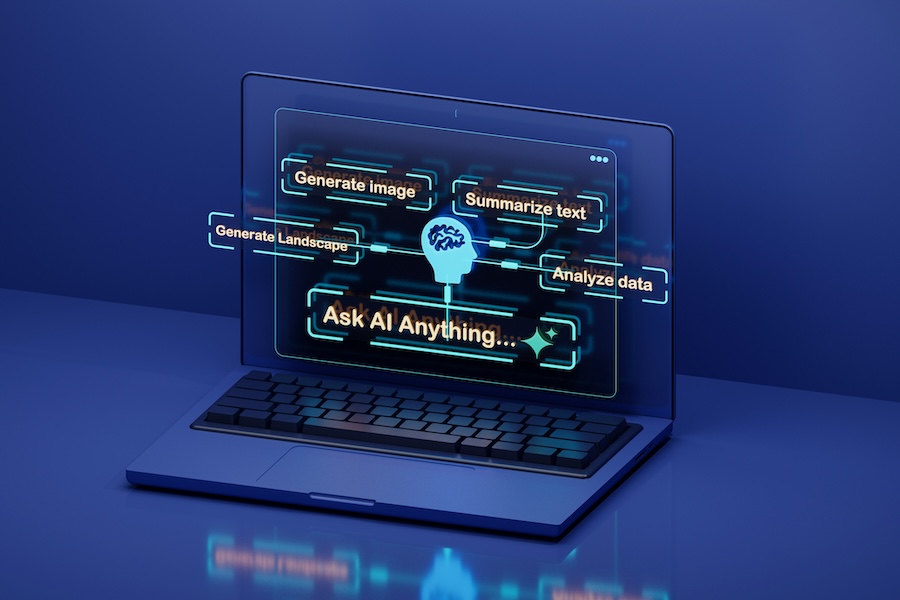
Source: Unsplash
For example, it can work as a job posting generator in recruitment by analysing job requirements to create job postings and supporting hiring procedures. The other example of a simple reflex agent is a smoke alarm, which is installed in the ceiling of your kitchen, detects smoke, and then sounds an alarm. In documentation sections, it validates markdown files to ensure proper formatting and adherence to standards, etc.
Robotic agents
Robotic agents extend beyond basic execution to enable the robot to learn, adapt, and achieve its goals, with navigation and robotic arms performing highly complex tasks.
Robotic agents accomplish these functions through the use of various hardware sensors, computer algorithms, and artificial intelligence training. Sensors, algorithms, and training help robotic agents to make decisions in real time. This kind of AI agent can physically perform utility or goal tasks when combined with other forms of AI, sometimes in hierarchical or multi-agent AI systems.
They are perfect for realising of ideas for AI agents; there are enormous examples of deploying them, like in the medical sector When performing precise and minimally invasive procedures, surgeons are assisted by robotic agents such as the da Vinci Surgical System.
Although they don’t carry out surgeries on their own, these AI agents increase the surgeon’s possibilities. In everyday life, the vacuum cleaner is a popular agentic AI example frequently used to make housework easier.
Virtual assistants
The strongest category of AI agent is absolutely the virtual assistant, because of its widespread exploitation, like the use of ChatGPT and Google Assistant or Siri in Apple devices.
Thanks to the combination with GPT integration services, these smart personal assistants utilise AI to understand and interpret human language. After that, they perform tasks associated with that understanding, such as setting reminders or email administration and so on.
As a result, these AI agent ideas not only assist users but also provide them with modern ways of doing things, as they are capable of evolving along with the user and adapting to their needs as they interact with the agent.
As an example, it might be a historical personal simulator that gives people a chance to speak to historical figures in the form of an artificial intelligence assistant in order to get some historical knowledge or perspectives of that era, particularly for educational aims.

Source: Unsplash
Systems with multiple agents
The advantage of systems with multi-agents lies in the variety of interactions, as they can combine, for instance, generative AI consulting, a simple software agent and many others. Their operation could be described as a wonderful team collaboration of agentic AI ideas.
Although distinct agents have some degree of autonomy, they are all intended to interact with one another, creating a dynamic ecosystem in which individual actions lead to collective behaviour.
You can observe it in the logistics domain and supply chain; suppliers, manufacturers, distributors, and retailers are just a few of the stakeholders that agents represent.
These agentic AI business ideas cover everything from procurement to delivery and work together to optimise the supply chain process, guaranteeing effectiveness and cutting expenses. In data analytics, enterprises are aimed at reaching automated data visualisation by using multi-agent collaboration.
In addition to these, these intelligent agents can be found in traffic management, where several agents stand in for various information systems, traffic signals, and security cameras and optimise traffic flow at scale. Through the exchange of information between agents, adjustment of traffic signals can occur through the collective effort of those involved; thus, the significance is placed on collaboration
Wrapping up
In conclusion, it is quite vital to underline that from the introduction of artificial intelligence into industries throughout the world and in our routines, including healthcare, financial services, the retail sector, transport, robotics, manufacturing, the education area and many others, business leaders have established trust in artificial intelligence itself and agentic AI project ideas; the positive results and the extensive AI chatbot development common today prove this fact.
At this time, there are scores of agentic AI examples that are capable of a wide variety of multiple tasks and use cases, providing solutions for reducing costs and increasing efficiencies and productivity, as well as providing opportunities for innovation and fast technological growth. There will be significant impacts on the contents of our daily lives as AI continues to evolve further. More and more organisations rely on AI capabilities and put them into their practices in order to prospect and have a competitive edge on the market or just to enhance the operations.
Nevertheless, it is not always necessary to create your own AI agent on your own. If you have made up your mind to adjust to agentic AI now, opening new horizons for your business success and building a unique, effective artificial intelligence agent, companies can delegate this task to an AI company with a team of professionals.
FAQ
-
The 5 main categories of AI agents are the following: simple reflex agent, model-based reflex agent, goal-based agent, utility-based agent and learning agent.
In terms of how well AI agents comprehend their surroundings and internal states, each category will show a higher degree of complexity than the one before it. What is more, they effectively come to decisions about how to carry out the tasks they have been programmed for.
-
If you strive to create your own AI agent, first of all you will have to follow some steps. The first step is to define the agent’s purpose and specific tasks; you ought to understand clearly your goals.
The next one is to pick up either a code-free platform or a code-based platform. After that, determine the instructions to provide your agent by deploying large language models like GPT-4, giving it a strong system prompt, memory, and instructions.
Go on your creation with the connection of your agent with tools and data. Link your agent to other apps, chatbots, and knowledge bases. Do not miss, for improved performance, continuously test, collect feedback, and improve the agent’s tools, logic, and prompts.
And finally, the last step is the deployment of your AI agent. Continue to test, collect feedback, and improve the agent’s tools, logic, and prompts for optimal further performance.
However, it is far better to address a company with an experienced team in this sphere, especially if you are a beginner, as you do not need to have coding experience or be highly technical. AI agent companies obtain a number of advantages, like a solid expertise in automation, reduction of errors and saving costs, qualitative interfaces and frameworks, multiple model backends and customisable templates.
-
Artificial intelligence has turned out to be a must in almost every field these days. The scope of artificial intelligence application extends from the health sector and the robotics sector and engineering to our everyday life.
Besides, artificial intelligence is being actively used in finance, manufacturing, machine learning, natural language processing, computer vision, transportation, expert systems, planning and decision-making, and speech recognition.
Basically, these fields concentrate on specific issues like autonomous systems, control, data-driven pattern recognition, human-language interactions, and visual data interpretation.